Hapinoy Is An Open Source Model for Low-Income Markets
Editor’s Note: The following is the second of two posts on Hapinoy and its microfranchise/distribution model. The first can be found here.
As Hapinoy expands, it reaches more of the BoP market. Through its network of suki stores, the company is able to offer other products and services that do not currently reach the BoP.
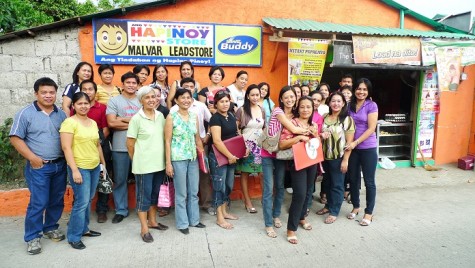
The founders like to think of Hapinoy as analogous to the iPhone. In the same way that the Apple device is an open-source platform for apps created by outside programmers, Hapinoy is a distribution vehicle for products to the BoP developed by social entrepreneurs. For example, through its stores Hapinoy sells solar lanterns, mosquito nets to combat dengue fever, and, starting in April, eyeglasses.
A few years ago, it created a pharmacy program, selling low-cost over-the-counter medicines. Hapinoy stores also are mobile cash agents for Smart Money and act as a mail acceptance counter for Mail and More. In the future, it will focus on nutrition and water, health and wellness, technology, energy, and livelihood opportunities. Ruiz would like to incorporate local producers into its supply chain network. “One key pillar of the future is to open up the Hapinoy Distribution Platform for the products of community-based microenterprises as well. Product development exists to help microentrepreneurs create BoP products, but many have difficulty in marketing and sales.”
In terms of expansion opportunities, the sky seems to be the limit and the opportunity for scale is enormous. The Philippines offers a unique opportunity to build a strong microfranchise with virtually unlimited potential. Hapinoy builds on top of low-cost existing infrastructure and works with existing independent retailers. The 600,000+ individual sari-sari stores account for 30-40 percent of total retail sales in the Philippines. To date, it has 160 community stores serving 10,000 suki stores. In the future, it has the lofty, yet achievable goal of serving 100,000 stores. There is no doubt that Hapinoy can increase market penetration by adding new stores. As it grows, its role as a platform for delivering products and services to the BoP will expand.
One of reasons the model has been so successful is because it has been able to leverage the presence of a robust network of existing retail stores selling identical products. In this author’s opinion, the genius of Hapinoy is its mastery of supply chain logistics and ability to transform an unaffiliated network of stores into a distribution platform for the BoP. By managing its own supply chain and coordinating distribution of products to its franchisees, Hapinoy reduces the costs to both the store owners and the consumers, raising incomes across the board. Right now, for example, it is piloting a mobile phone-based ordering system with five of its stores. But it is through its role as a distribution channel for the BoP where it can create systemic transformation in the country.
As readers of this blog can attest, there are countless products designed for the BoP markets. The bottleneck is not in innovation, but rather in distribution. Getting the products from the factory to the BoP can be the biggest challenge faced by companies serving the BoP. Mobile money providers have to overcome the chicken-and-egg problem of simultaneously building a customer base and an agent network. Manufacturers of solar lanterns and cook stoves rely on independent agent networks, which are difficult and costly to manage; and MFIs, which are financial institutions, and not retailers. The problem is that very few global-scale companies (with the exception of Coca-Cola) serve the BoP market. Thanks to Hapinoy, the BoP market in the Philippines is open for business.
Read a transcript of the full interview at Develop Economies.
- Categories
- Environment