-
Reshaping Africa’s Food Systems: Three Opportunities to Drive Sustainable, Inclusive and Scalable Impact
Africa's agricultural sector is plagued by low yields, fragmented value chains and a large finance gap, and the region is home to 60% of the world’s uncultivated arable land. As Neil Wood, Oscar Garza and Hanna Dohrenbusch at Open Capital explain, these challenges have brought the sector to a critical juncture. They share three key solutions based on Open Capital's work on 450+ agriculture and food systems projects across Africa, which have the power to help drive the future of agriculture on the continent in the decades to come.
- Categories
- Agriculture, Energy, Environment, Investing, Technology
-
Global Poverty Measurement is A Mess, And it’s Holding Back the World’s Anti-Poverty Efforts
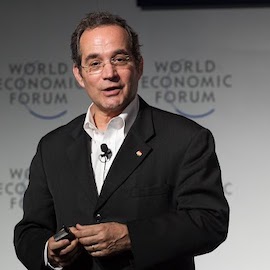
A recent Stanford University study on the impact of poverty measurement found vast differences between four common approaches, affecting both how anti-poverty programs define and measure poverty — and who qualifies for assistance. As Martin Burt at Fundación Paraguaya argues, this lack of coordination is hindering global poverty alleviation efforts. He proposes a different approach to poverty measurement: one based on listening to the perspectives of the people who are experiencing poverty, and providing them with customized strategies to address the specific challenges they face.
- Categories
- Social Enterprise
-
The Emergence of ‘Resilience Credits’: How a New Asset Class Can Unlock Investment in Climate Resilience — And Why Impact Measurement Will be Key to its Success
Investments in building climate resilience in vulnerable communities are falling woefully short — and the private sector is almost entirely absent. Rania A. Al-Mashat, Egypt’s Minister of International Cooperation, Jyotsna Puri at IFAD and Jonathan Phillips at Duke University explore an innovative solution to this finance gap: “resilience credits.” They explain how this new asset class aims to align public and private capital to build and measure climate resilience — and discuss the pros and cons of different impact measurement approaches for resilience-focused projects and businesses.
- Categories
- Environment, Investing
-
Changing the Profitability Paradigm: A Key Report Aims to Rally Global Investors Behind a Sustainable Approach to Finance
As the global economy struggles to navigate financial crises and address shared challenges like climate change, Lucas Magnani at Convergences argues that the need to transform the profit-centric approach of traditional finance is increasingly urgent. He shares insights from Convergences' latest Impact Finance Barometer report, highlighting several ways that impact investors and others are working to put profitability and positive impact on equal footing — and some key areas where more progress is needed.
- Categories
- Investing
-
Accelerating Africa’s E-Commerce Revolution: A SaaS Solution Leverages Payment and Logistics Innovation to Unleash the Continent’s Entrepreneurial Potential
Africa’s e-commerce landscape is in the midst of an ongoing revolution, as the growth in internet access has enabled businesses across the continent to sell their products locally, regionally and globally. Moulaye Taboure at ANKA explains how his company is leveraging “Software as a Service” (SaaS) innovation to connect these businesses with consumers, while providing payments and logistics services geared toward their unique needs. He shares highlights from a recent ANKA whitepaper that outlines key trends and developments in African e-commerce.
- Categories
- Finance, Technology
-
Breaking Barriers, Building Futures: How Supporting Women-Led MSMEs Can Boost Empowerment and Drive Job Growth in India
Small businesses — especially women-led micro, small and medium enterprises (MSMEs) — are emerging as pivotal drivers of economic growth in India. According to Umesh Singh at Tara Candles, these MSMEs can play a key role in boosting employment — but to do so, they’ll require more support. He explores how women-led MSMEs are creating jobs and promoting inclusive growth, and discusses how the government and other stakeholders can help women entrepreneurs overcome the challenges they face in starting and running a business.
- Categories
- Education
-
Nine Business Models for Productive Use of Electricity in Africa: A Framework for Generating Profit and Impact in Off-Grid Energy
Improving energy access in rural Africa is crucial for poverty reduction, but grid electricity is often inaccessible or unaffordable — and off-grid alternatives present similar challenges. Olowo Aminu, Bodunde Akinola, Nneka Chime and Mosorire Aiyeyemi at CrossBoundary argue that Productive Use of Electricity (PUE) has the potential to solve these issues, boosting household income and economic growth, while increasing profitability for energy providers. They share a framework CrossBoundary has developed to help off-grid companies and other stakeholders plan for effective PUE implementation.
- Categories
- Agriculture, Energy, Environment, Technology
-
From Proxy IDs to Autonomous Payments: Why the Future of Financial Services is Hyper-Efficiency
Despite the rise of digital banking and other technological advancements, financial services are still plagued by significant inefficiencies. Author and serial entrepreneur Arunjay Katakam explores the causes and consequences of these inefficiencies — including their impact on lower-income customers — and discusses some emerging innovations that are addressing them. He explains why the sector's growing efforts to streamline back-end processes, reduce transaction costs and enhance operational efficiency will be pivotal in shaping the future of financial services.
- Categories
- Finance, Technology